An increasing number of South Korean women are choosing not to marry, not to have children, and not even to have relationships with men. With the lowest fertility rate in the world, the country’s population will start shrinking unless something changes.
“I have no plans to have children, ever,” says 24-year-old Jang Yun-hwa, as we chat in a hipsterish cafe in the middle of Seoul.
“I don’t want the physical pain of childbirth. And it would be detrimental to my career.”
Like many young adults in South Korea’s hyper-competitive job market, Yun-hwa, a web comic artist, has worked hard to get where she is and isn’t ready to let all that hard graft go to waste.
“Rather than be part of a family, I’d like to be independent and live alone and achieve my dreams,” she says.
…
When I put it to her that if she and her contemporaries don’t have children her country’s culture will die, she tells me that it’s time for the male-dominated culture to go.
“Must die,” she says, breaking into English. “Must die!”
Everybody and their cousin has experienced the argument “is a tomato a fruit or a vegetable” at some point in their lives. It’s a fun bit of trivia, and let’s know-it-all’s speak condescendingly, or at least they did like 10 years ago. “Knowledge is knowing tomato is a fruit, wisdom is not putting it in a fruit salad”. Whatever.
Which brings up the point, that botany and culinary sciences are very different. Botany is the study of plants, culinary is cooking and how things taste. Botany is science, and it has rules (kind of), where cuisine is full of guidelines that are completely cultural.
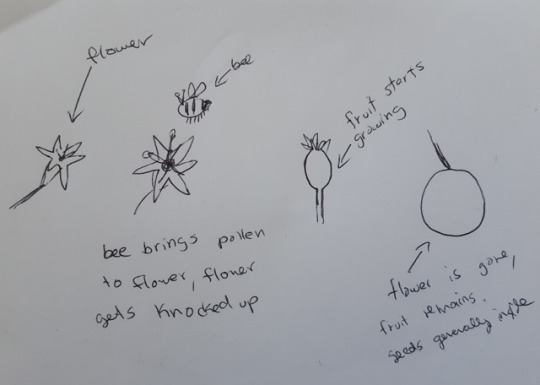
Tomatoes are a fruit. A fruit is how many plants have babies, and are made in the ovary of a flower. I have a diagram.
Armed with this knowledge we can know that tomatoes, cucumbers, squash, beans, peas and peppers are all fruit.
“Now”, I ask you, “what are lettuce, and cabbage, and spinach, and kale”?
“Vegetables”, you say, assuredly.
“Yes, but, what are they?”
“…vegetables”, you say, slower, and louder this time, not quite sure what I’m wanting from you.
No. They are leaves.
What are carrots, beets and radishes? Roots. What about celery and rhubarb? Stems. Potatoes? Tubers (food storage for the plant, and where new plant babies will grow from). Garlic and onions? Bulbs (also food storage). Mushrooms? They’re not even a plant, they’re a fungus, in the kingdom of fungi, which is somewhere between the plant and animal kingdoms.
“Vegetables” is just a word for plants that we eat, that doesn’t have enough sugar to be a fruit, and not enough flavour to be a herb or spice.
Botanically speaking, there is no such thing as a vegetable. They’re just different parts of a plant that happen to be edible.
There are other plants, normally considered weeds, that can be “eaten like a vegetable”. Dandelion, stinging nettle, dock, purslane, can all be cooked and eaten, making them vegetables, at least to the people to treat them as such. It’s all very cultural, and biased, and based on nothing but what people think it is. Therefore, they are not a real thing, it’s just a concept.