
Amazing how often women are trashed for supposedly cutting off sex once they’ve got a wedding ring out of it, while almost nothing is said about how many straight dudes think that getting a ring on her means you officially get to peace out of helping with things like housework and childcare, and doing anything whatsoever to emotionally contribute to the relationship (I don’t mean big things like a dozen roses and a €400 meal at the fanciest restaurant, just little day to day shit that shows your partner that you still like and care about them ).
Do you really think these two aren’t connected? Anyone, regardless of gender, would lose their libido quickly when they’re stuck dealing with exhaustion and lowkey emotional neglect
Category: Non classé
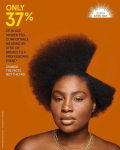

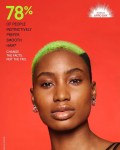

Hair bias is a real problem. It’s rarely talked about, but it affects millions globally.
This World Afro Day, we’re calling time on this.
Whatever your hair type, join the movement to Change the Facts, Not the Fro. In celebrating our Afro hair this weekend in all of its versatility, help us continue the conversation by tagging us in your pics @worldafroday.
Let’s wear and share our hair with pride!
Models:
@__olakemi__
@eeshamarr
@thekimhiatoussaint
@dee_ajayiHair: @charlottemensah
Photography: @d_kakembo
i just remembered that 6 yo me swore they would marry a giant worm because “i dont like boys! i dont want a HUSBAND! id rather have A GIANT WORM!” and,,,,,,,,
idk how id survive without water ❤
You wouldnt
haha. i feel like that sometimes too. glad someone loves water as much as i do 🙂
I despise when cishet men say they’re sex positive in their profiles, like of course you are shut up.
this means, “i have learned to manipulate the language of sex positivity to pressure women into sex”
“I feel positive about you having sex with me”
rifa:
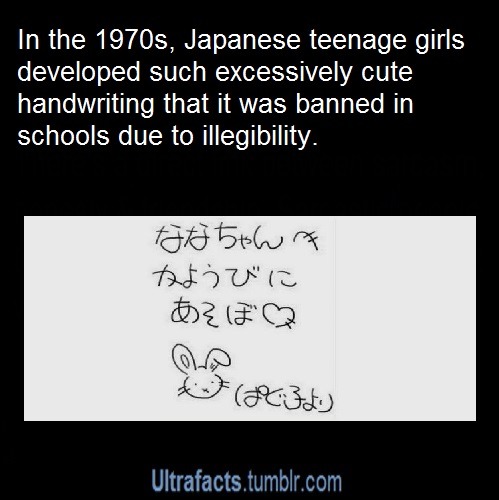
THE BEGINNINGS OF KAWAII
No, no, you have no idea. It actually IS the beginning of the whole so-called “kawaii culture”. And it started because girls started using mechanical pencils, which provided fine handwriting. After being banished (more precisely, during the 80s), this kind of writing started being used in products like magazines and make-up. And, during this time, icons we usually associate with the whole kawaii industry (like the characters from Sanrio) came to life too.
And what many people don’t realize is that this subculture was born as a way for young girls to express themselves in their own way. And it was also used as something against the adult life and the traditional culture, often seen as dull and boring and oppressive. By embracing cuteness, these young girls (and adult women, after a while) were showing non-conformation with the current standards.
So yep. Kawaii is important, and it all started with cute, simple handwritting a few hearts and cat faces in some girls’ school notebooks ❤
!!!!!
NO OK THIS IS SO IMPORTANT!
This is also how the kawaii fashions started! Girls began dressing in cute and off beat styles for themsleves, they were criticized by adult figures telling them “you’ll never find a husband if you dress that way!” to which they began to reply “Good!”
All the Japanese subcultures and fashions that evolved out of this became a rebellion to tradition and the starch gender roles and expectations the adults were forcing on the younger generations. As early as the 70s and still to this day you’ll see an emphasis on child-like fashion and themes in more kawaii styles and the dismissal of the male gaze with styles like lolita (a lot of western people assume lolita is somehow sexual due to the name of the fashion, but ask any Japanese lolita and they will tell you that men hate the style and find it unattractive which is sometimes a large reason they gravitate towards the style – they can express their femininity and individuality while remaining independent and without the pressure to appeal to men)
Its so so so important to understand the hyper cute and ‘odd’ fashions of Japanese girls carry such a huge message of feminism and reclaiming of their own lives.
so are you telling me that Japan’s punk phase was really the kawaii phase
Kawaii is so goth
the most fucked up thing about married straight couples in paranormal reality shows is that the husband is almost always the skeptic and the wife will be like terrified to exist in her own home and she’ll beg her husband to believe her and she’ll be crying every night and he’ll straight up look at the camera and be like “I don’t know I guess I just thought she was imagining things.”
like this is beyond belief in ghosts what it comes down to is one member of these couples was so distressed they were in tears nightly or at least weekly, BEGGING their partner to listen to them, and their partner was like “whatever this’ll blow over.”
how does your relationship survive that?? how are these people still together?? if my wife came into the room crying and told me she’d seen bill watterson, author of acclaimed comic calvin and hobbes, manifest in our kitchen and tell her he didn’t like our wallpaper, I’d like. obviously have some questions. but I’d fucking address her distress and take steps to make her feel better lmao???
these husbands are all garbage and they feel justified bc they weren’t the “crazy one” who believed in ghosts.
they were the good, logical, “sane” spouse who did rational and good things like, completely and purposefully ignore their partners’ growing and life-altering distress for months.
Idk, I always found the toxic heteronormative gaslighting to be the true horror in those shows anyway.
I remember one interview in particular that the couple was hosting a family reunion and four cousins and their mothers had all witnessed something and LEFT for a hotel in the middle of the night and the husband literally was like “they just all worked each other up!”
My favorite (”favorite”) episode was one where a very young and very obviously frightened young woman was just bawling her heart out and her husband just stared blankly at her, and then when asked about it he just shrugged and said “I dunno, I haven’t seen anything upsetting” like, your wife, bawling her eyes out and begging with you for help…is not upsetting? What?? the?? fuck??
Um, I mean these are all kinda legit as an actual trope thats leaned on as visual symbolism?
In the same way that zombies is often referring to viewing part of the population as mindless (the popularity of zombies tend to rise in years of great social upheaval) and that witches are based on misogyny and that vampirism are based on fears of sexuality:
haunted houses tend to refer to domestic abuse.
got euthanized at Claire’s


