
Some people always get super salty when they come asking for help with a “ghost haunting” and the first thing i ask them is “have you checked your living space for carbon monoxide”.
Like maybe you thought coming to a witch you’d get some neat spell or some shit, but a big part of being a (good) witch is also looking at what is in front of you and ruling out some basic things first, and a lot of the things people describe to me when it comes to ghost hauntings also sound a helluva lot like carbon monoxide poisoning. So like sorry for giving a shit over whether or not you’re actually about to die or not I guess *shrug emoji*
Like I know we joke about my house being haunted (and maybe it is) but when the lights flicker in my house I don’t do a cleansing spell, I call an electrician. You gotta do the physical world things first before you jump to the metaphysical. That’s just how it is.
tumblr is like wading through everyone else’s garbage until you find something good and go “ah. this is good” and take it and display it in your own garbage pile
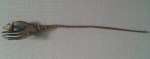
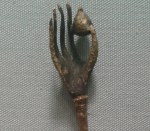
Roman bronze hairpin in the shape of a hand holding a pomegranate, symbolic of the Roman underworld
Found in Carlisle, on display at Tullie House Museum and Art Gallery
Queer Eye but it’s five roman priestesses who give you advice on how to ward off the Evil Eye
Queer Eye but it’s five roman priestesses who give you advice on how to ward off the Evil Eye
overlooked roman gods
some gods and goddesses that are overlooked in common mythos, or don’t have Greek counterparts and are often ignored!!
Caelus: father of the sky and heavens, consort of Terra/Gaia. counterpart of Uranus
Carmenta: goddess of childbirth, motherhood, prophecy, and technological innovation. supposedly created the Latin alphabet. although similar to Hera and Leto, no Greek counterpart
Dis Pater: god of agriculture and underground riches, later became an underworld god, often confused with Pluto/Hades, the husband of Proserpina/Persephone (Pluto also was her husband, but Pluto is featured in the abduction of Proserpina myth, while Dis and Proserpina seem to have had a consensual and loving relationship). Dis, Orcus, and Pluto became conflated as a later version of Pluto, who was the counterpart of Hades
Feronia: goddess of wildlife, fertility, health and abundance. also was seen as the goddess who granted freedom to slaves
Flora: goddess of flowers, fertility, youth, and springtime. counterpart of Chloris
Furrina: goddess of springs and bubbling water, according to Varro (a Roman writer/scholar). it’s actually unknown if this is true or not but based on the origins of her name, it’s likely that it is true
Janus: god of beginnings, gates, transitions, time, doorways, duality, most often portrayed with two faces, looking to the future and the past. probably the most famous Roman god with no Greek counterpart
Liber: god of wine, fertility, freedom, speech. sometimes associated with Dionysus/Bacchus but not equivalent
Ops: goddess of fertility and the earth. wife of Saturn/Cronus, and mother of Jupiter/Zeus, Neptune/Poseidon, Pluto/Hades, Juno/Hera, Ceres/Demeter, and Vesta/Hestia. counterpart of Rhea
Orcus: a god of the underworld, punisher of broken oaths, often confused with Dis and Pluto. Dis, Orcus, and Pluto became conflated as a later version of Pluto, who was the counterpart of Hades
Pales: deity/deities of shepherds, flocks and livestock. not much is known about Pales, but some regard them as male, some as female, and grammatically could refer to more than one deity, so their gender (or multiplicity too I guess) is really up to interpretation
Pomona: goddess of fruit, gardens and orchards. may have been a wood nymph. although associated with Demeter, no Greek counterpart
Portunus: god of keys, doors, livestock, and seaports. originally had no counterpart, but later became synonymous with Palaemon
Salus: goddess of the safety, welfare, health, and well-being of the Roman state and people. sometimes associated with the Greek Hygieia, but has no actual counterpart
Summanus: god of nocturnal thunder and lightning, as opposed to Jupiter, the god of diurnal thunder. it’s thought that at one point, Summanus was more revered than Jupiter, but later, Jupiter surpassed him
Terra: mother earth, consort of Caelus/Uranus. counterpart of Gaia
Vertumnus: god of seasons, plant growth, and vegetables(?). tricked and seduced Pomona
Volturnus: god of the Tiber river, and possibly all rivers
can I add some of my favourites
Carna: Goddess of door-hinges
Fornax: Goddess of baked goods
Mefitis: Goddess of farts (actually of all sulphurous gasses)
Fascinus: god of Dicks
Mutunus Tutunus: god of dicks
Priapus: yeah he’s another god of dicks
discuss philosophy with your best friend in your garden while you walk by statues of satyrs with big phalluses
physically I’m here but mentally I am in my countryside villa writing elegies about the woman that I adore

Hey as a linguistics enthusiast I just want to inform all of you that AAVE (African-American Vernacular English) isn’t just a group of “slang words” but actually has a fully developed grammar system with different features than mainstream English, and that it could and should’ve been standardized a long time ago except white people feel uncomfortable at the idea of it being given equal status as other english dialects.

